seasonal
On Halloween, New York Hands Its Streets Back to the Neighbors
This October the city is closing a record 160 streets and plazas to cars for Trick-or-Streets. The idea is older than the program, and it says something about who a street is for.
The LovelyNYC Editors · October 19, 2026 · 5 min read
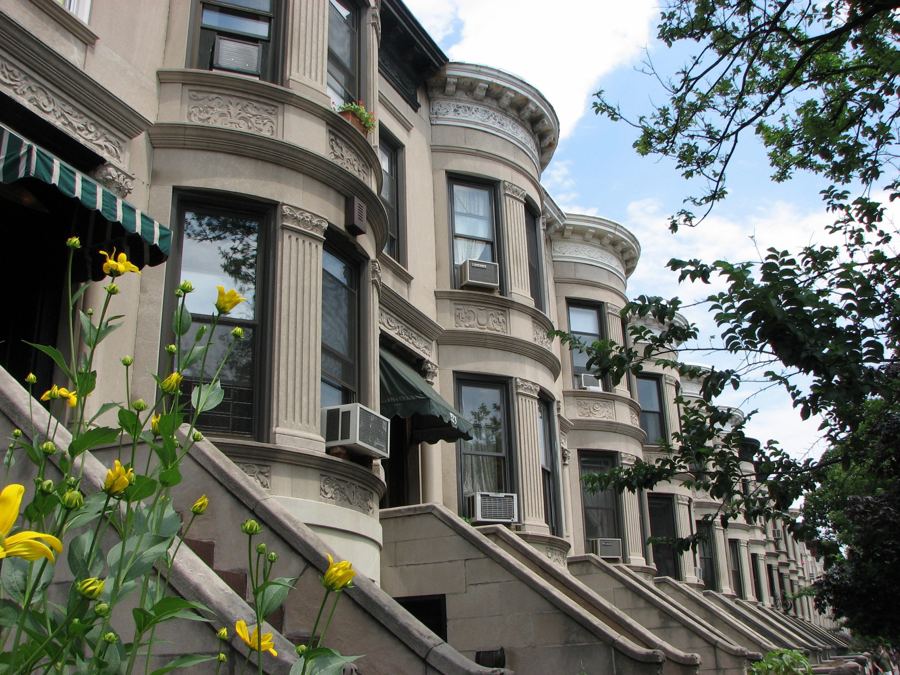
Most of the year, a New York side street is something you get through: a lane of parked cars, a lane of moving ones, and a narrow strip of sidewalk where everyone else is meant to fit. On Halloween, a lot of those streets briefly become something else. For a few hours the barricades go up, the cars stay out, and the roadway belongs to whoever lives on the block and whatever they happen to be dressed as.
The city calls it Trick-or-Streets. On September 30 the Mayor's Office announced the largest edition yet: 160 car-free Open Streets and plazas across all five boroughs, with free trick-or-treating, face painting, games and live entertainment. NYC DOT runs the program, which is in its fifth year, and events are spread through October, but the heaviest day is the obvious one. Halloween falls on a Saturday this year, and dozens of blocks go car-free on October 31 itself. For scale, DOT's 2025 announcement counted a then-record 137 events.
Older than the program
New Yorkers didn't need a city program to think of this. On West 69th Street, between Broadway and Central Park West, the Halloween block party dates to 1971, when it was started by the Broadway star Gwen Verdon. It now draws thousands of people, and when it was called off in 2020, West Side Rag reported it was the first cancellation in nearly fifty years. This year it is on DOT's list, 6pm to 8pm.
The citywide version grew out of something more recent. The city created Open Streets as an emergency program at the start of the pandemic, letting neighbors close blocks to traffic from May 2020. According to the city Comptroller, it peaked at 326 sites in 2021 and was down to 232 by 2024. Trick-or-Streets runs on that same idea, scaled up for one month: a block association, merchants' group or other local partner hosts, DOT clears the street with the city's permit office and the NYPD, and for an afternoon a street becomes a room the whole neighborhood can use.
What a closed street is for
New York has about 6,300 miles of streets, by the Comptroller's count, and nearly all of them are organized around vehicles. Halloween is the one night a year when that arrangement looks most out of step, because it is the night the city's smallest residents are most likely to be walking around in the dark, in masks, darting between doorways.
The numbers bear this out. A study in JAMA Pediatrics, using U.S. federal crash records from 1975 to 2016, found that the risk of a pedestrian being killed was 43 percent higher on Halloween evenings than on comparable nights, and roughly ten times higher for children aged four to eight. Risk peaked around 6pm. We couldn't find any city evaluation of whether Trick-or-Streets reduces crashes, so we won't claim it does. The case for it is simpler: on a block with no cars, a five-year-old can cross the street without anyone holding their breath.
There is a quieter benefit, too. A closed street makes a block legible to itself. People who have nodded at each other for years end up standing in the same patch of asphalt, comparing costumes. Nothing about that needs a statistic.
Some blocks on the 2026 list
Every block below is on NYC DOT's official list for Saturday, October 31, with the hours DOT gives. In Manhattan, West 69th Street's party runs 6pm to 8pm. Strivers' Row hosts a Halloween festival on West 139th Street, between Frederick Douglass and Adam Clayton Powell Jr. boulevards, from 3pm to 8pm. In the Village, West 11th Street between Washington and Greenwich streets is car-free from 3pm to 10pm, and West 78th Street between Amsterdam and Columbus runs 4pm to 9pm.
In Brooklyn, Montgomery Place in Park Slope, between Prospect Park West and Eighth Avenue, is open from 11am to 8pm, and the Park Slope Civic Council's Halloween Parade marches down Seventh Avenue from 3rd to 14th Street, 6:30pm to 9pm. In Brooklyn Heights, Joralemon Street between Furman and Hicks streets is car-free from 4pm to 8pm, a short walk from the Promenade. The Bronx's signature event is at James Baldwin Plaza, by Mosholu Parkway, from 10am to 3pm, and in Staten Island, Park Place hosts the Hamilton Park Halloween Block Party from 1pm to 5pm. Queens has more than a dozen locations, many of them in the early afternoon.
The biggest closure of all is Sixth Avenue for the Village Halloween Parade, which steps off at 7pm. Our Halloween guide has the parade route, where to watch, how to march, and the rest of the season's events.
How to find your block
The full list lives at nyc.gov/trickorstreets, sorted by date, with an interactive map. The map shows the whole month by default; move its date slider to October 31 to see Halloween alone. DOT warns that the map can lag behind the list, so treat the list as the final word, and notes that events are subject to delay or cancellation. Hours vary a lot: some blocks open in the morning, many start mid-afternoon so younger children can be home before dark, and a few run late into the evening.
New this year are free neighborhood walking tours led by the Municipal Art Society, which need advance registration, and Street Lab activities outside some public schools. The city says it is handing out 75,000 pieces of candy.
Staying safe, on the block and off it
A car-free block is only car-free during its listed hours, and only for that stretch. The corners at either end are ordinary intersections, and when a block's window closes it is an ordinary street again. That matters most in the early evening, the hours the JAMA study flagged as the riskiest.
The New York Department of State's standing Halloween advice is sensible and short: young children should trick-or-treat with an adult; put reflective tape on costumes and treat bags; cross at corners and in crosswalks; teach children to make eye contact with a driver before stepping in front of a car; and walk, don't run, across the street with phones put away. Drivers should be careful passing stopped vehicles, which may be letting children out or across.
Then go and stand in the middle of the road. It is, for one evening, exactly where you're supposed to be.
Editorial draft — core details last reviewed October 19, 2026. Confirm practical details with the official site before you go.
Good to know
On Halloween, New York Hands Its Streets Back to the Neighbors, answered
How many streets are car-free for Trick-or-Streets 2026?
The Mayor's Office announced 160 car-free Open Streets and plazas across all five boroughs on September 30, 2026, the largest Trick-or-Streets yet. Events run through October, with the most on Saturday, October 31. Source
Where is the official list of Trick-or-Streets blocks and hours?
NYC DOT posts every event, sorted by date and with its hours, at nyc.gov/trickorstreets, along with an interactive map. DOT says the map can lag, so check the list, and that events are subject to delay or cancellation. Source
What time is the West 69th Street Halloween party in 2026?
NYC DOT lists the West 69th Street Halloween Party, between Broadway and Central Park West, from 6pm to 8pm on Saturday, October 31, 2026. Source
More like this
Get the Lovely Letter
A free weekly letter: new restaurants and bars, the week's concerts and events, and one lovely day in New York.
Keep reading
city stories
The Most Beautiful Streets in New York
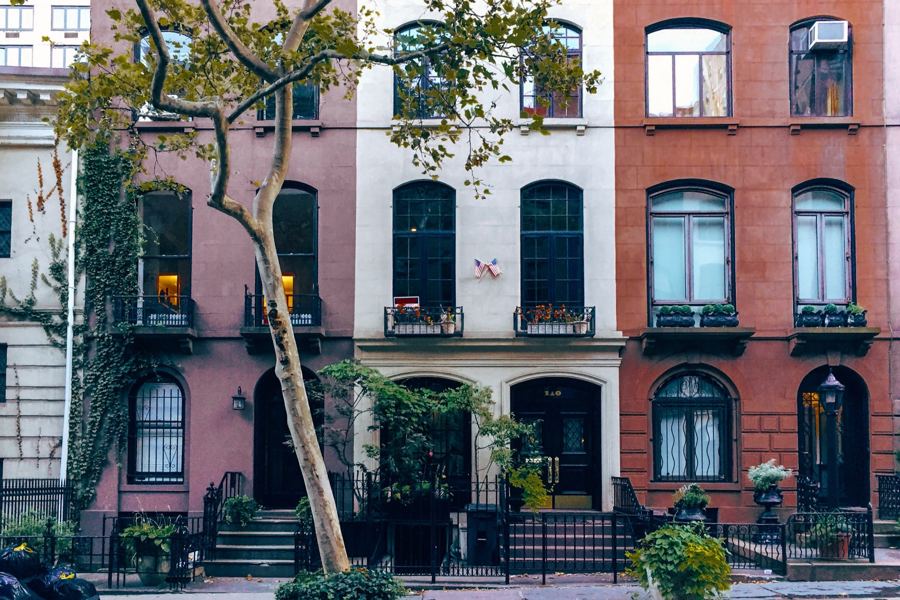
Forget the avenues. The city's real beauty lives on its smallest streets — cobbled lanes, cast-iron blocks, and bends in the grid where New York forgets to be in a hurry.
October 11, 2026 · 8 min read
weekend
A Lovely Weekend in New York
Two days, one city, and no agenda beyond good coffee, long walks, and the kind of evenings New York does better than anywhere else.
October 11, 2026 · 9 min read