hidden
Twelve New York Secrets Hiding in Plain Sight
A whisper that crosses a vaulted hallway, a drone under a Times Square grate, a room full of dirt in SoHo. The city is full of things millions walk past every day. Here is where to find twelve of them, and what each one costs: almost always nothing.
The LovelyNYC Editors · October 22, 2026 · 8 min read
If you are new here, welcome. LovelyNYC is an independent guide to the New York we love most: the places that make you stop on the sidewalk. We thought the best way to say hello was with the kind of thing we like finding most, the secrets that are hiding in plain sight.
None of these needs a guide, a password or a reservation, and all but one are free. What they need is knowing where to stand. We checked every one against its official source in October 2026, and where something has changed, or a famous story turns out to be a myth, we say so.
1. The Whispering Gallery, Grand Central
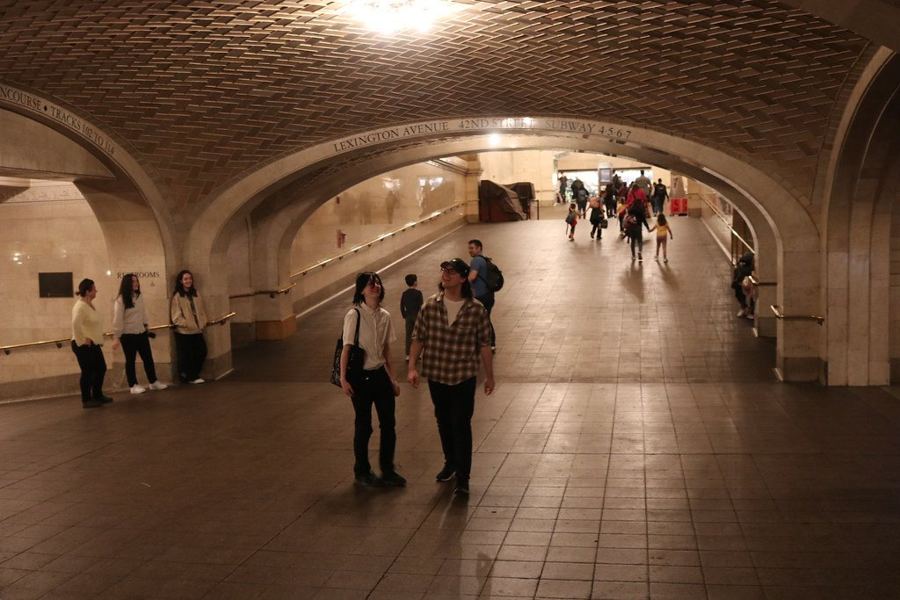
Go down the ramps from the Main Concourse toward the Dining Concourse. Right outside the Grand Central Oyster Bar, the walkways cross under a low vault of tightly set Guastavino tile. Stand in one corner facing the wall and have a friend stand in the corner diagonally opposite, about 30 feet away. Whisper into the tile, and your friend will hear you as if you were standing beside them, straight through the rush-hour crowd.
The hard, curved tile carries the sound along the arch. Nobody knows whether the effect was planned or a happy accident. In 2012 Metro-North spent $450,000 replacing about 200 tiles and the tired mortar, one quadrant at a time, and the acoustics came through untouched. It is free whenever the terminal is open.
2. The dirty patch on Grand Central's ceiling
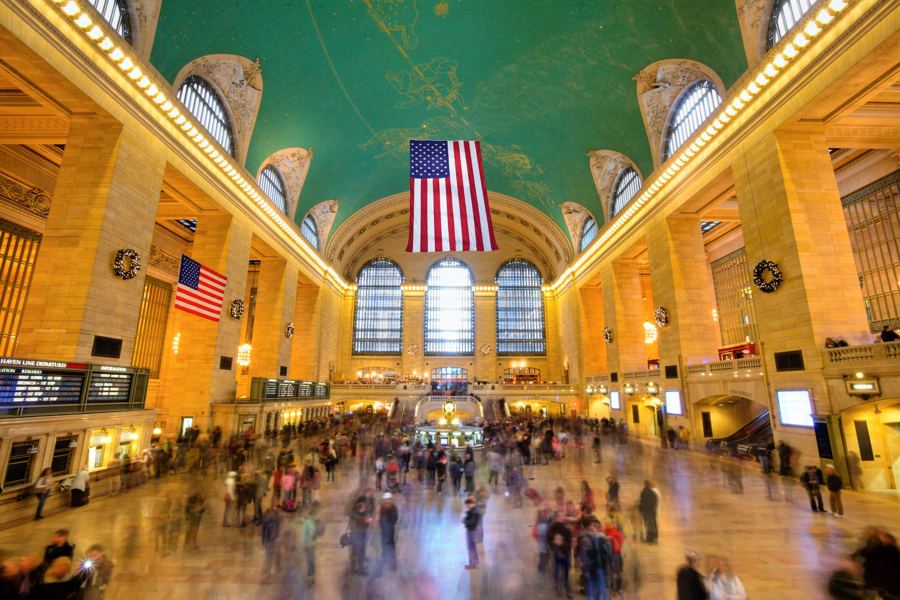
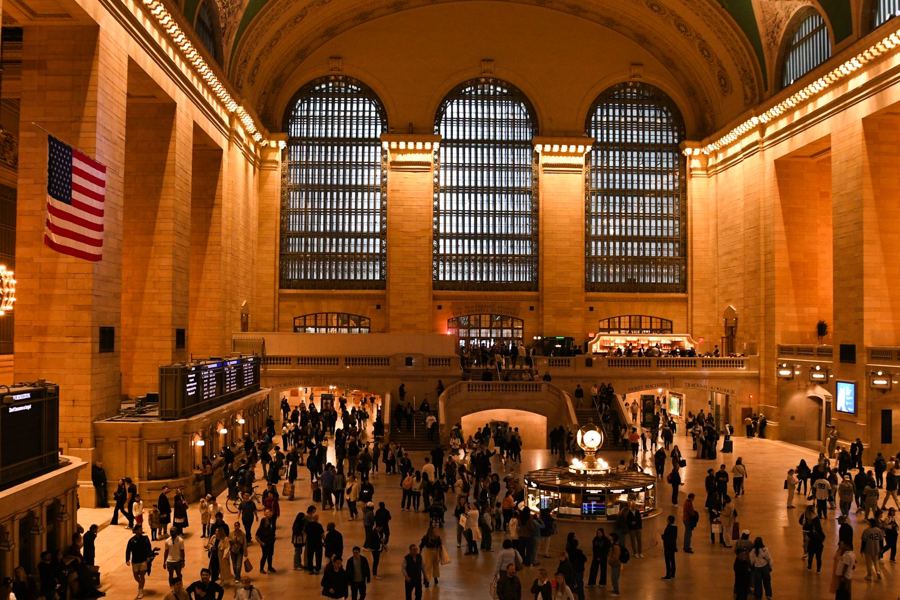
Now go back upstairs and look up. Near the constellation Cancer, the crab, there is a small dark rectangle, about 9 by 18 inches. The restorers who cleaned the ceiling in the late 1990s left it on purpose, to show how filthy the whole sky had become. (A separate small dark hole above Pisces is something else: it was made in 1957 for a cable holding up a missile on display.)
You will often hear that the grime was decades of cigarette smoke. That story is disputed: the restorers' lab analysis reported mostly soot and air pollution. Two more things the tour guides love: the sky is painted backwards, east to west, probably because the painters worked from a chart held the wrong way, and the ceiling you see is not the 1913 original but a 1944–45 replacement painted on boards. You can still make out the seams.
3. The ghost station under City Hall
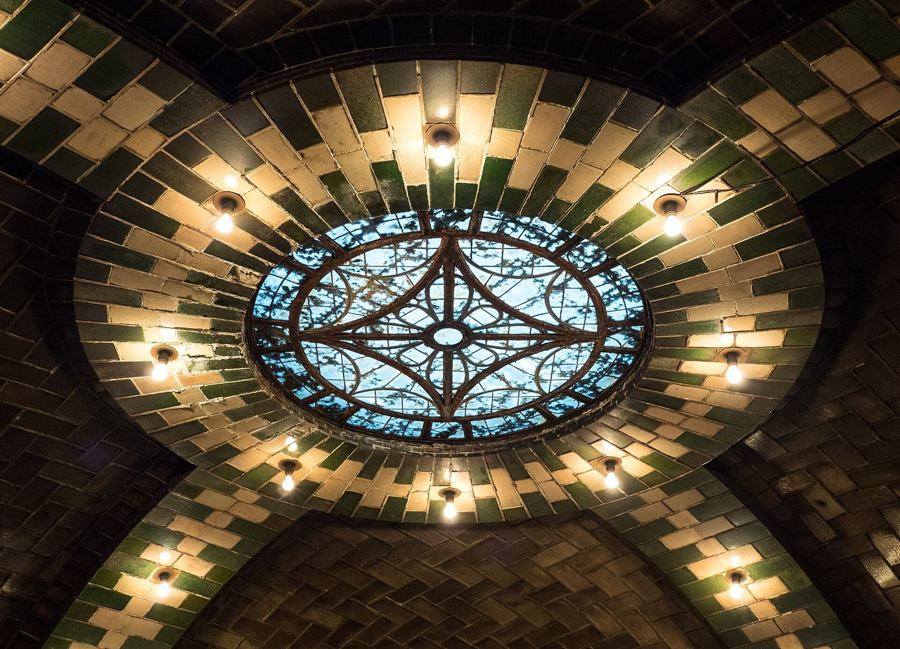
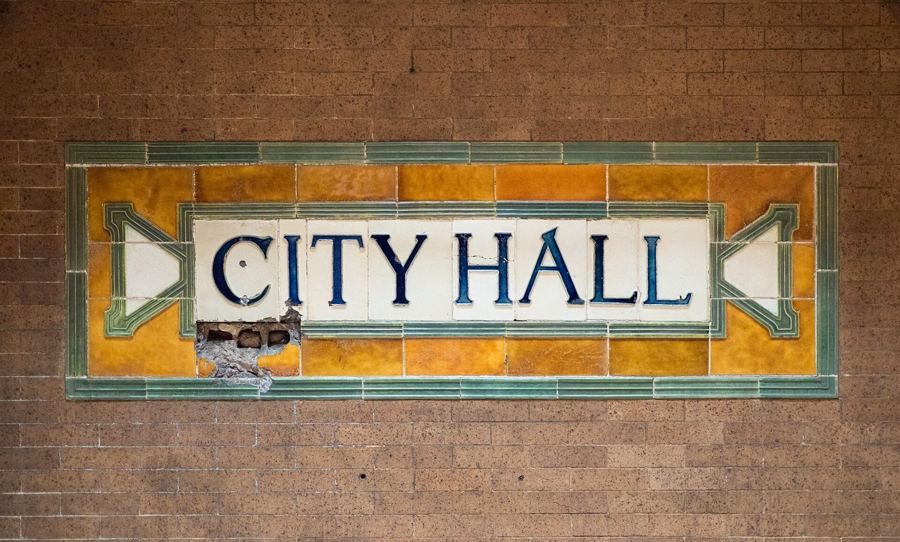
New York's first subway opened on October 27, 1904, and its showpiece was City Hall station: Guastavino tile vaults, brass chandeliers and leaded-glass skylights on a sweeping curve. It closed at the end of 1945 because its short, curved platform could not fit the longer trains, and it has been a city landmark since 1979.
The station is still there, and the downtown 6 train still turns around through it. Officially, riders are supposed to leave at Brooklyn Bridge–City Hall, the last stop, but in practice people are generally allowed to stay on for the loop. Sit on the right-hand side and watch the chandeliers and skylights slide past. If the crew asks you to get off, get off. The New York Transit Museum runs occasional members-only tours of the platform; the 2026 dates have all passed, so check their site for new ones.
4. The Hess Triangle
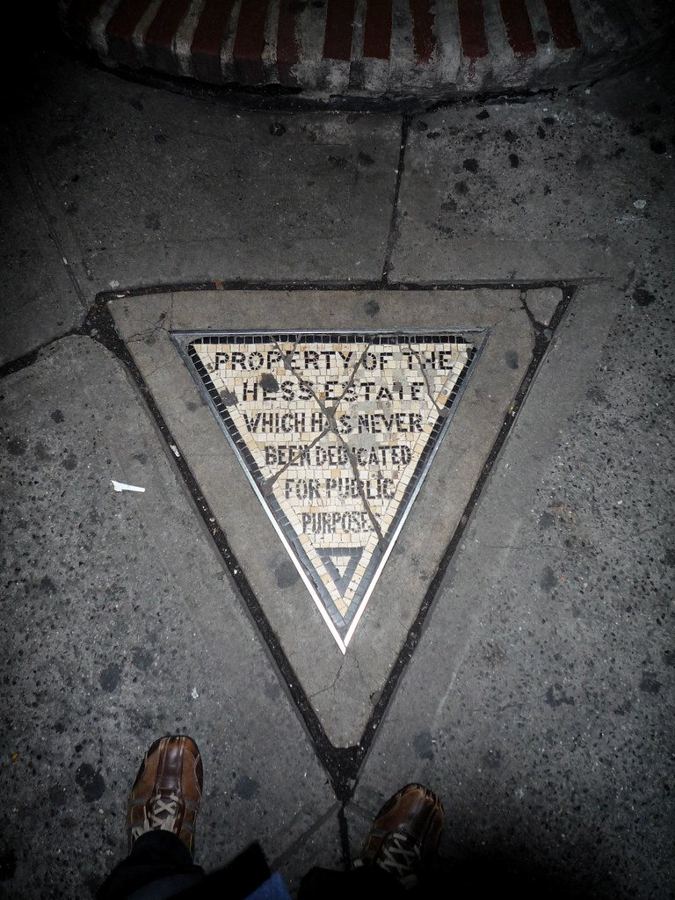
At the corner of Seventh Avenue South and Christopher Street, look down. Set into the sidewalk is a small triangle of tile, roughly 25 by 27 inches, that reads: "Property of the Hess Estate which has never been dedicated for public purposes."
In the 1910s the city seized and demolished hundreds of buildings to extend Seventh Avenue and dig the subway, including an apartment house owned by the Hess family. A sliver of their lot was left out, the heirs refused to hand it over, and in July 1922 they laid the mosaic as a protest. In 1938 it was sold for a nominal sum to the cigar shop next door. Village Cigars closed in 2024; a Georgian restaurant, Mamali, now has the space and kept the famous red sign. The mosaic is still there, 24 hours a day, often called the smallest piece of private property in New York.
5. The sound under Times Square
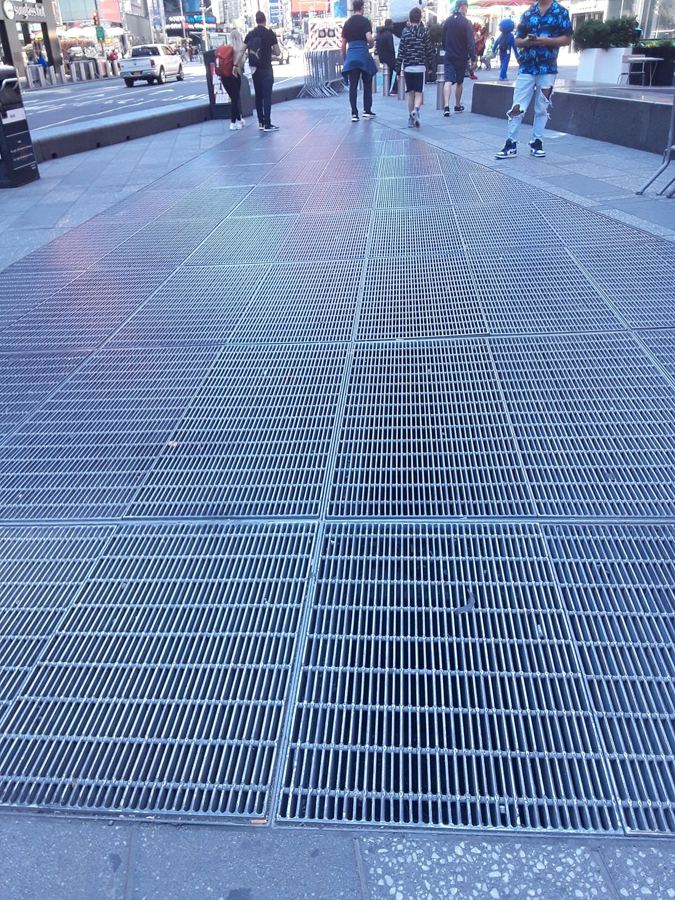
On the pedestrian island where Broadway and Seventh Avenue cross, between 45th and 46th Streets, there is a large subway grate toward the north end. Stand on or beside it and listen. Under the traffic you will hear a deep, humming drone, a little like the ring that hangs in the air after a big bell.
It is a work of art, Times Square by Max Neuhaus, installed in 1977 and owned today by Dia Art Foundation. There is no sign, on purpose: Neuhaus wanted people to discover it without being told. It went quiet in 1992, came back in 2002, and kept running even while the plaza was rebuilt around it. Late at night or early in the morning, when the street is quiet, is the best time to hear it.
6. A room full of dirt in SoHo
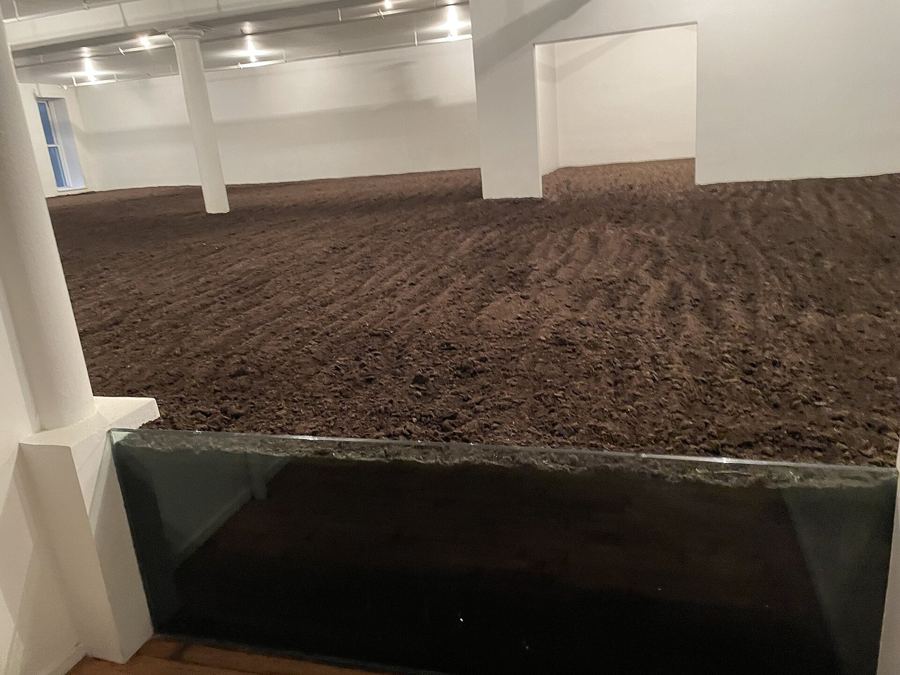
Climb a staircase at 141 Wooster Street and you will find a white loft filled with 250 cubic yards of earth, 22 inches deep, wall to wall. It is The New York Earth Room by Walter De Maria, first shown in 1977 as a three-month exhibition and never taken away. Dia has looked after it since 1980.
For 35 years a caretaker, the painter Bill Dilworth, watered it, raked it and pulled out the mushrooms. After a conservation closure in 2022 it is open again: quiet, oddly moving, and free. Hours are limited and change, so check Dia's website before you go, don't step on the soil, and ask before taking photos. Dia's other De Maria piece, The Broken Kilometer, is a few blocks away at 393 West Broadway.
7. The museum in a freight elevator
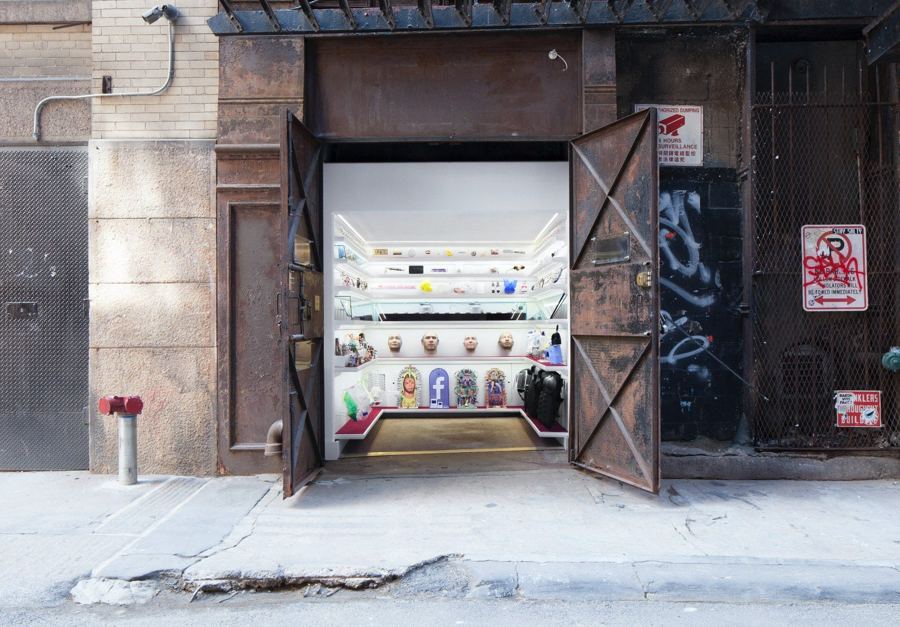
In Cortlandt Alley, a narrow lane just below Canal Street that film crews love, there is an old freight elevator shaft of about 36 square feet. Since 2012 it has been Mmuseumm, a tiny museum of what it calls modern natural history: everyday objects, collected and labeled with great seriousness. This year's season is called Modern Rubble Around the World.
It is open weekends, 11am to 6pm, and when it is closed you can still peer through the peepholes in the doors.
8. A secret acre above Water Street
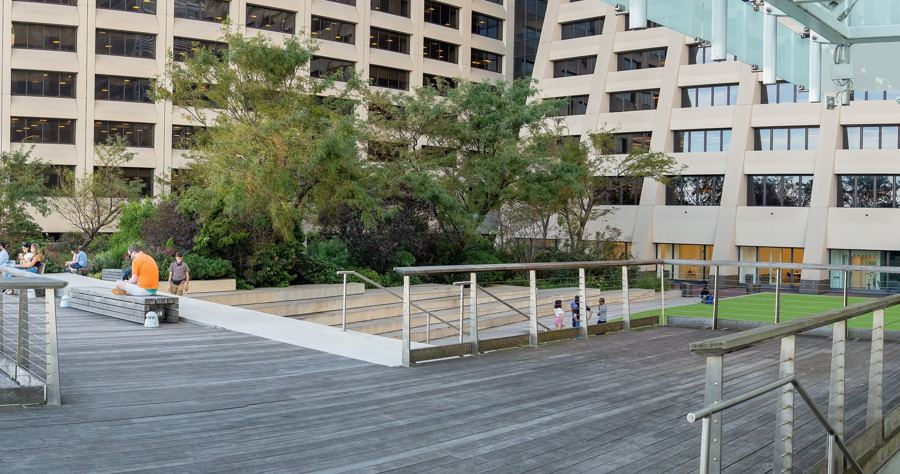
Walk past 55 Water Street in the Financial District and you would never guess there is a park above you. Look for the escalator set back from the sidewalk and ride it up. At the top is the Elevated Acre, more than 41,000 square feet of lawn, planting and boardwalk, with views over the East River to the Brooklyn and Manhattan Bridges.
It is a privately owned public space, so it is legally open to everyone and free, though it keeps set hours and sometimes closes for private events. Hours are posted at the entrance. It is one of the best places downtown to eat a sandwich.
9. Pomander Walk
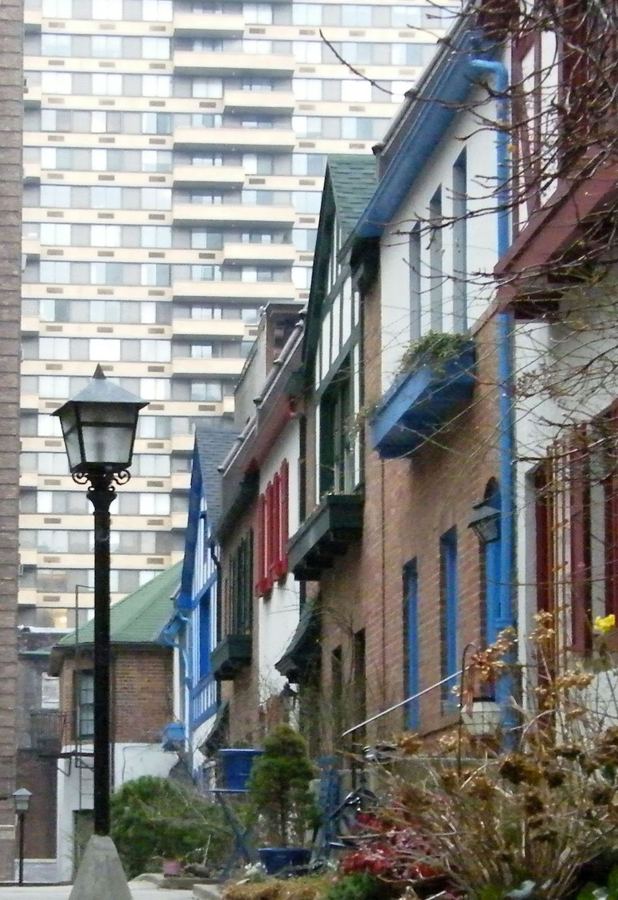
On West 94th Street between Broadway and West End Avenue, look through the gate. Behind it, a little lane of Tudor-style cottages runs through the middle of the block, like a village from an English stage play. That is exactly what it is: Pomander Walk was built in 1921 by the restaurateur Thomas Healy, modeled on the set of a 1910 comedy of the same name.
Healy meant it to be temporary, until he could build a hotel on the site. He died before he could, and the cottages became a city landmark in 1982. It is private and the gates are locked, so look from the sidewalk on 94th or 95th Street and leave the residents in peace.
10. Why the streets smoke
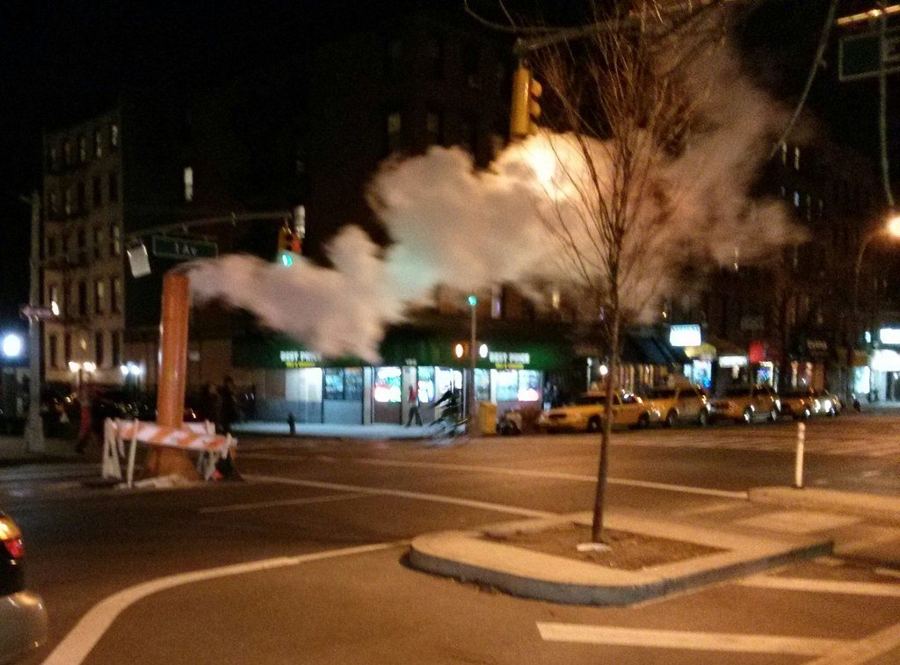
Those orange-and-white striped chimneys sticking out of Manhattan manholes are part of a secret most visitors never think about. Under the streets runs the largest district steam system in the United States: about 105 miles of pipe, operating since March 3, 1882, heating and cooling about 1,500 buildings, including the Empire State Building and Grand Central.
The "smoke" is mostly water, rain or groundwater hitting hot pipes and turning to vapor, or a small leak. The striped stacks just send it up above eye level so drivers and pedestrians can see while crews schedule repairs. Admire them, but don't touch them or stand over a vent.
11. The gold you will never see
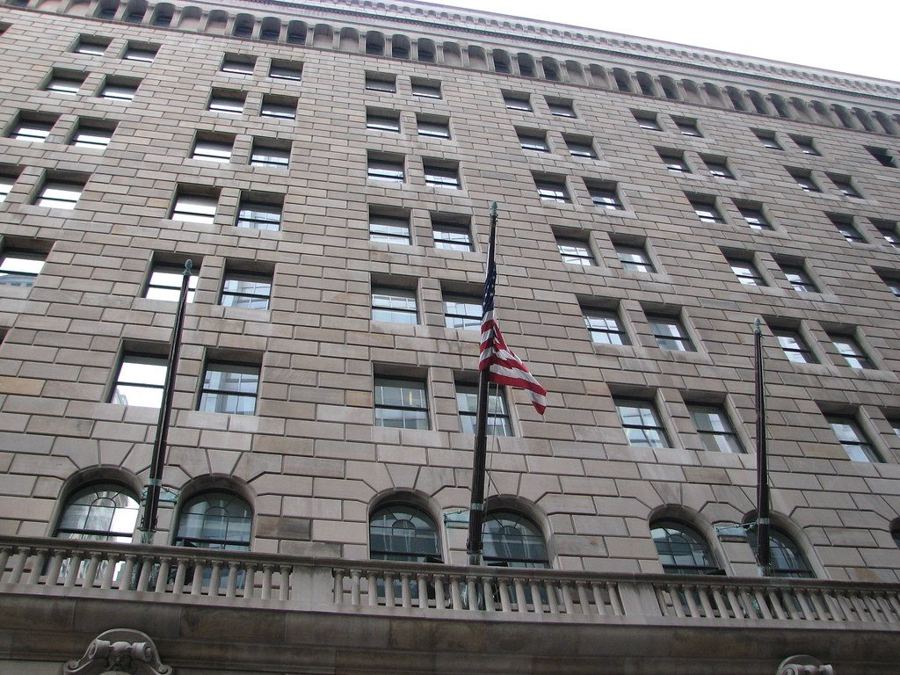
Eighty feet below 33 Liberty Street, on Manhattan bedrock, sits one of the largest stores of gold in the world: about 507,000 bars, more than 6,300 metric tons, mostly belonging to foreign central banks. The only way in is through a 90-ton steel cylinder that turns in a 140-ton frame.
Many older guidebooks tell you to book a free tour a month ahead. That tour no longer exists: the New York Fed now opens its museum only to school groups by reservation, and even they don't always see the vault. So this one is a secret you can only stand next to. Walk down Liberty Street and look at the fortress-like building and its wrought-iron lanterns, and think about what is underneath your feet.
12. A waterfall on East 51st Street
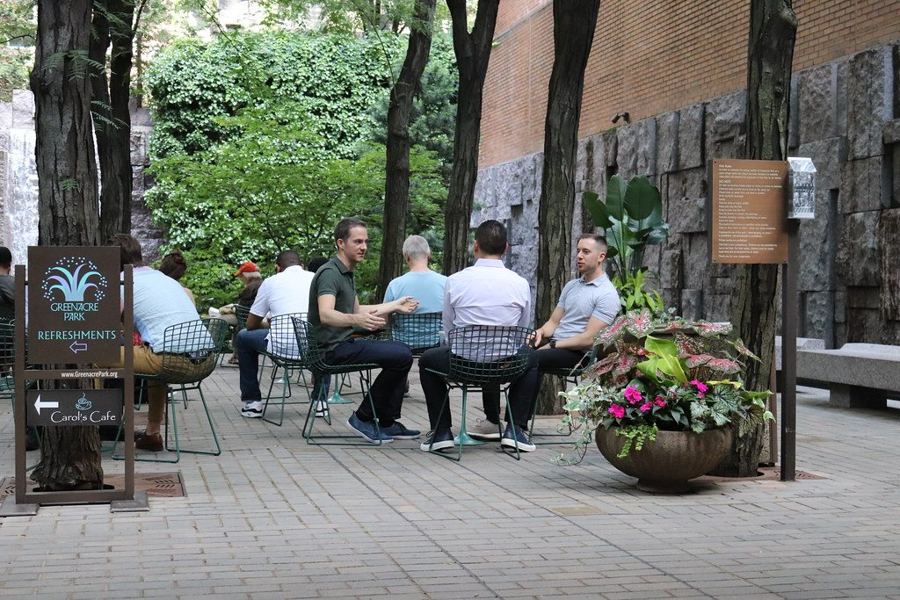
Halfway down East 51st Street between Second and Third Avenues, there is a gap in the buildings with a 25-foot waterfall at the back. Greenacre Park is a pocket park of just over 6,300 square feet, a gift to the city in 1971 from Abby Rockefeller Mauzé, granddaughter of John D. Rockefeller. Sit under the honey locusts and the roar of the water wipes out Midtown completely.
It is free and open daily from April through mid-December: 8am to 7pm through October 31, then 8am to 6pm until it closes for the winter on December 17. Go now, before it does.
Keep exploring
Most of these make an easy afternoon. Grand Central, Greenacre Park and Times Square are a short walk apart; SoHo, Cortlandt Alley and the Hess Triangle make a good downtown loop; and the Elevated Acre and Liberty Street are ten minutes from each other in the Financial District.
If you liked these, our guide to the most beautiful streets in New York is a good next read, and what's on this week shows what is happening around the city right now. Welcome to LovelyNYC. We are glad you are here.
Details checked against official sources on October 22, 2026. Hours and prices change — confirm with the official site before you go.
More like this
Get the Lovely Letter
A free weekly letter: new restaurants and bars, the week's concerts and events, and one lovely day in New York.
Keep reading
city stories
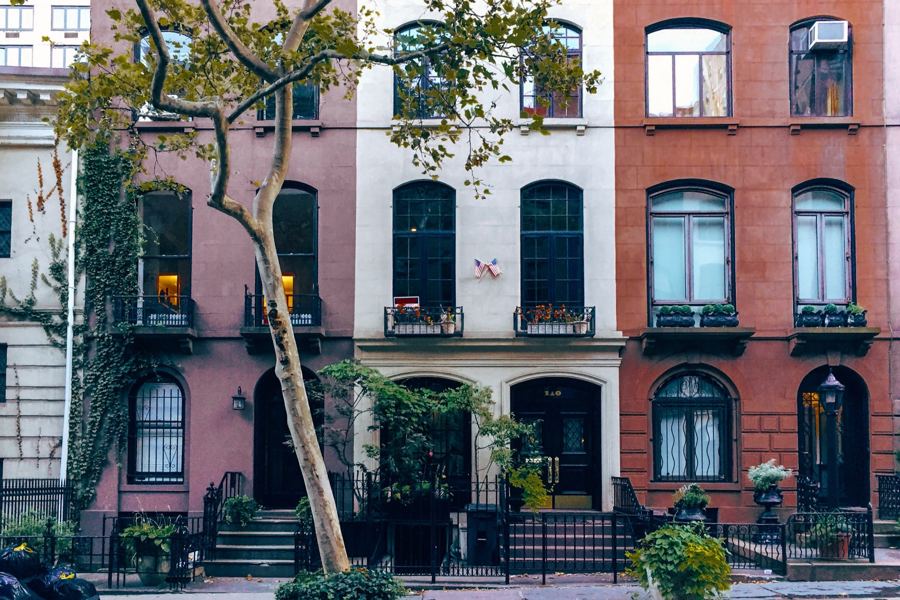
The Most Beautiful Streets in New York
Forget the avenues. The city's real beauty lives on its smallest streets — cobbled lanes, cast-iron blocks, and bends in the grid where New York forgets to be in a hurry.
October 11, 2026 · 8 min read
weekend
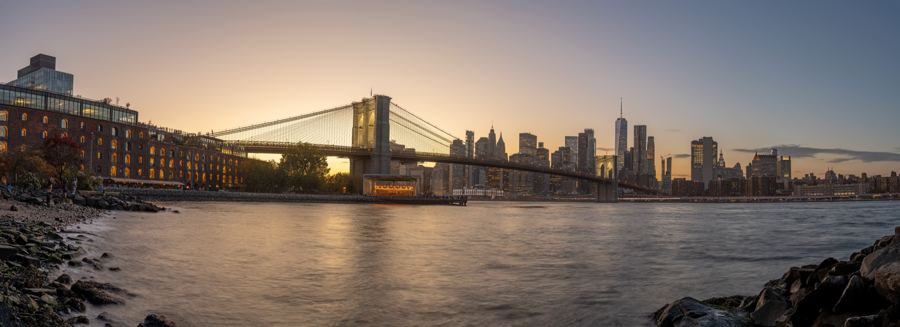
A Lovely Weekend in New York
Two days, one city, and no agenda beyond good coffee, long walks, and the kind of evenings New York does better than anywhere else.
October 11, 2026 · 9 min read